Guides / Design
How to choose a bridal mehndi design for your outfit
There is no single right design. These questions help you and your artist land on one that suits you.
Start with your sleeves
Sleeve length decides how much of the design is seen. With full sleeves, only the hands show, so fine detail on the fingers and palms matters most. With short or no sleeves, a design that runs up the forearm becomes part of the look.
Think about your jewellery
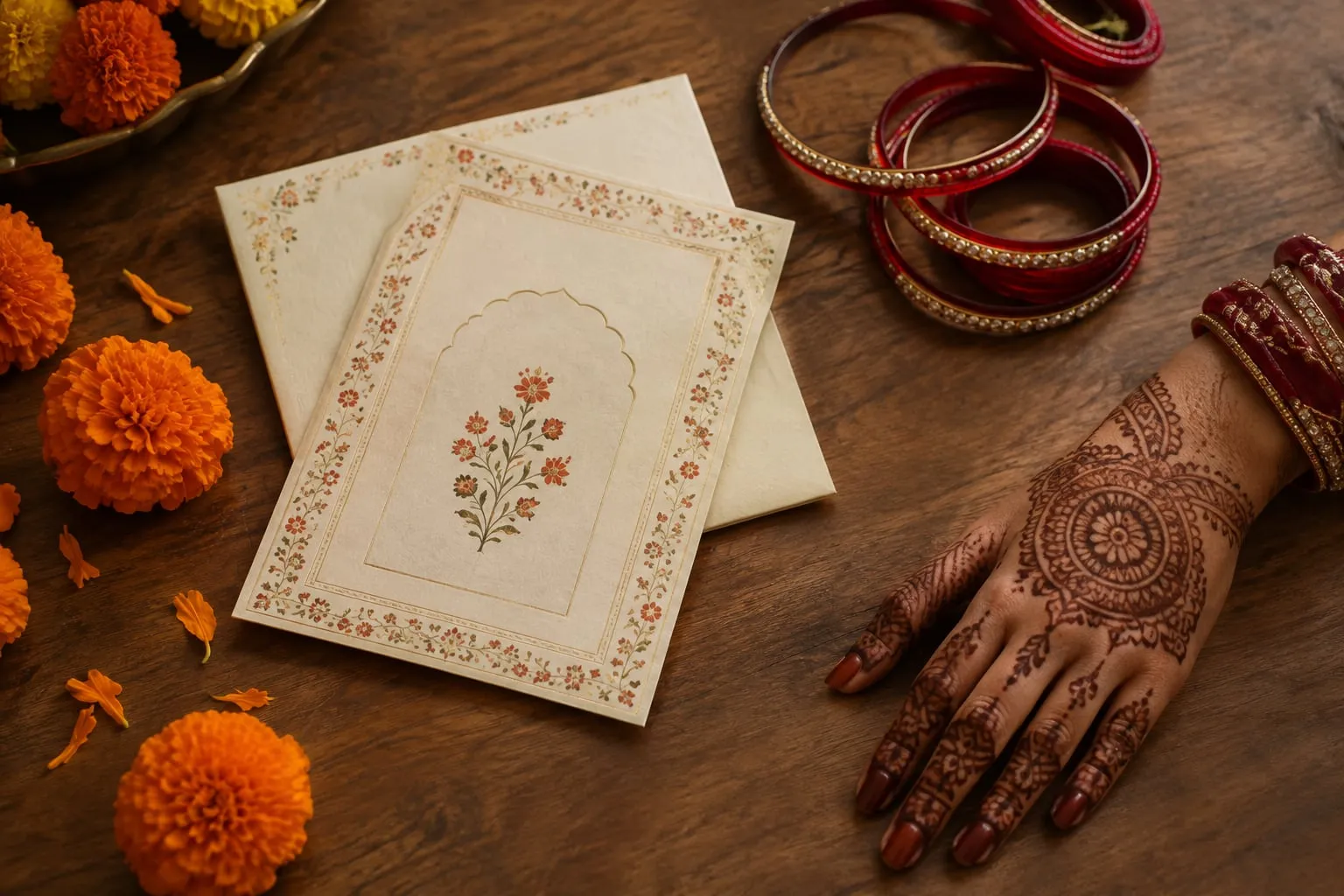
Bangles, a hath phool or bracelets cover parts of the wrist and the back of the hand. Tell your artist what you will wear so the pattern stays visible and does not hide under metal.
Balance the outfit and the design
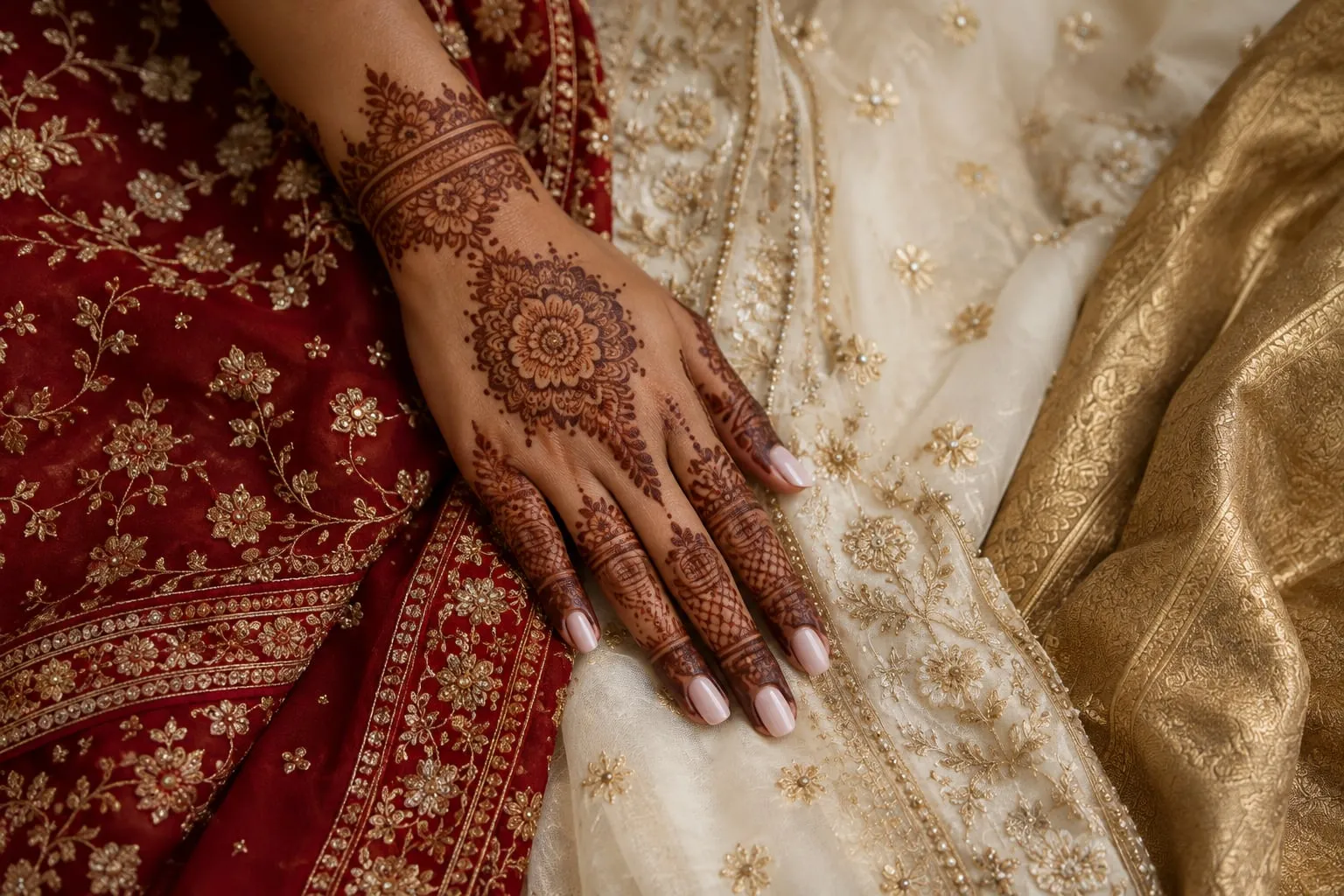
A heavily embroidered lehenga already has a lot going on, so some brides choose a design with more open space. A simpler outfit can carry a very detailed design. These are not rules, only a way to think about balance.
Choose your coverage
- Hands only: quicker, and a good fit for a tight timeline.
- Hands to the forearm: the most common choice for brides.
- Hands and feet: the full traditional look, which takes the longest.
More coverage and finer detail take more time, so plan your schedule around it.
Add something personal
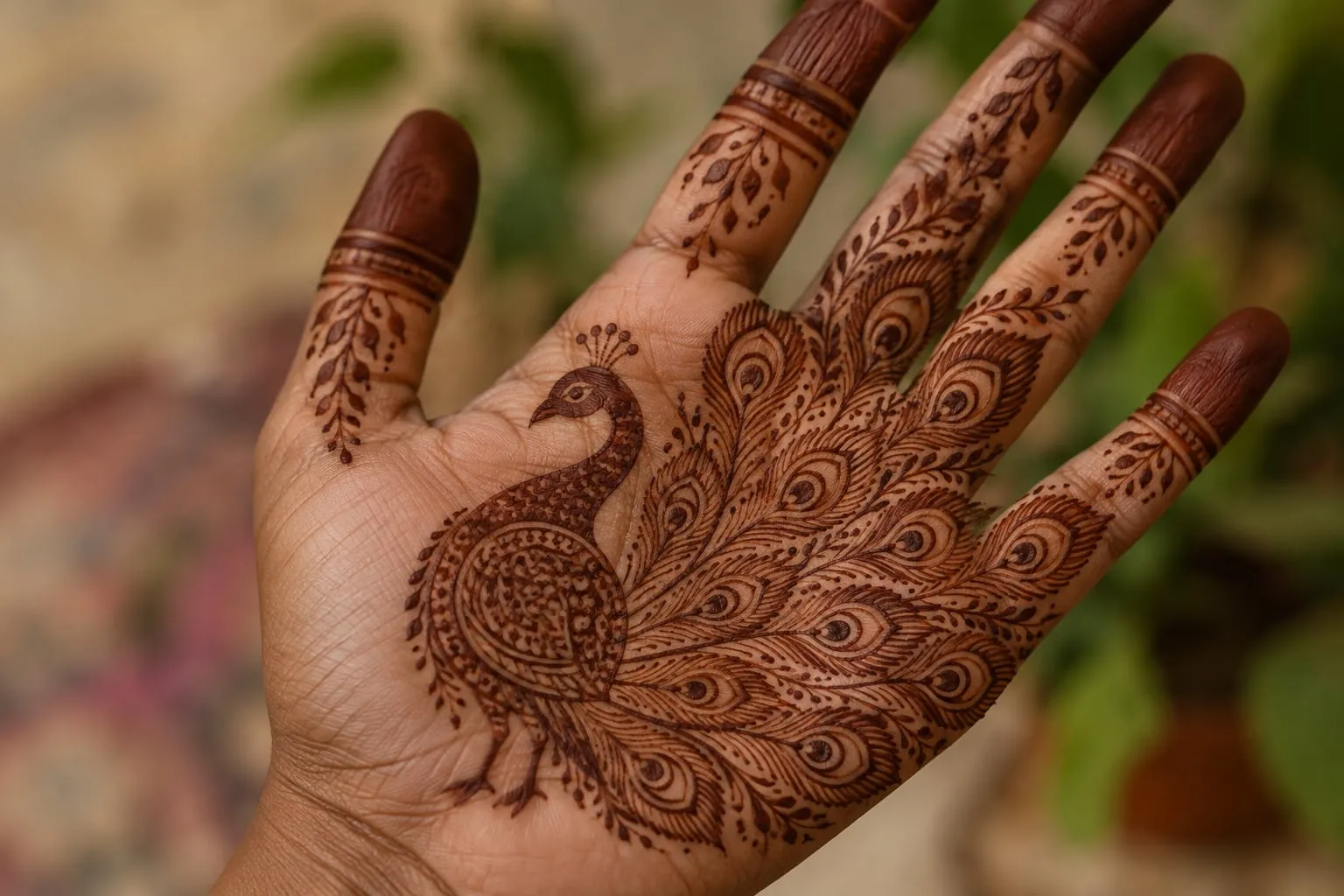
Many brides ask for motifs that tell their own story: a doli scene, the venue, initials, the wedding date or a favourite flower. Read what traditional motifs mean for ideas.
What to bring to your artist
- A photo of your outfit and the colours
- Your jewellery plan
- Three to five reference designs you like
- The date, venue and how many people need mehndi
Try not to bring references from many different styles. A few that share a feel are easier to turn into one design.
Which side gets photographed
Rings and ceremonies are often photographed on the back of the hand, while the palm is shown in many bridal portraits. Ask your artist to give both sides the attention they deserve.