Guides / Culture
Bridal mehndi motifs and what they traditionally mean
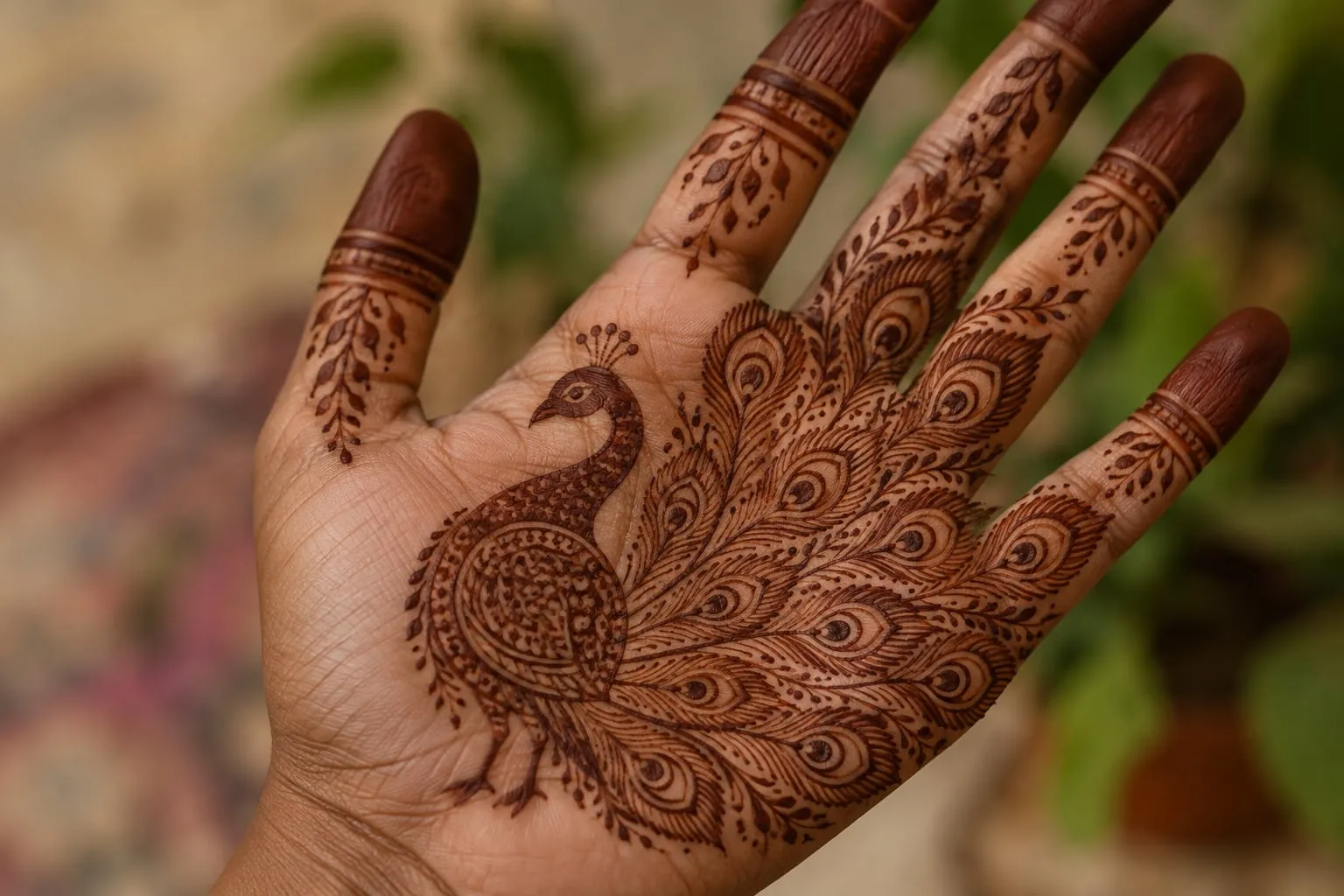
Bridal mehndi is full of symbols. Meanings differ between regions and families, so treat these as traditional associations and not fixed rules.
Peacock
The peacock stands for beauty, grace and love. It is one of the most popular bridal motifs, often drawn with a fanned tail across the palm or the back of the hand.
Lotus and mandala
The lotus is linked with purity and new beginnings. A mandala, a circular pattern that grows from a centre, is often placed in the middle of the palm. Both give a design a calm, balanced focus.
Kalash
The kalash, a pot of water topped with leaves, is a symbol of auspiciousness and abundance. You will often see it in traditional wedding designs.
Doli and bride and groom figures
Rajasthani bridal mehndi often includes a doli (palanquin) carried by bearers, with the bride and groom shown inside or beside it. It tells the story of the wedding procession.
Paisley
The paisley, called kairi or mango in India, is often associated with prosperity and fertility. It appears in borders, in corners and across the back of the hand.
Jaali
Jaali is a lattice pattern inspired by the carved stone screens of Rajasthani palaces. It fills the spaces between larger motifs and gives a design its lace-like texture.
Flowers and vines
Flowers and creeping vines stand for joy, growth and a lasting bond. They connect the larger motifs and run along the fingers and wrists.
Hidden initials
A well-known tradition is to hide the groom’s name or initials in the bride’s design. By custom, he is asked to find it. Tell your artist if you would like to include it.
Choosing yours
Ask your artist how to combine a few motifs so the design is balanced and not crowded. Our guide to choosing a design for your outfit covers coverage, sleeves and jewellery.